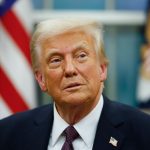




Former U.S. President Donald Trump once again stirred political discussion after claiming in an interview with CNN that Cuba’s political system could soon collapse. In the statement, Trump suggested that the island nation is approaching a turning point, saying, “Cuba is soon going to fall,” while also mentioning that he would “put Marco over there,” referring to Senator Marco Rubio, a prominent Cuban-American politician known for his hardline stance on the Cuban government.
The remark immediately caught the attention of political observers, analysts, and international media outlets. Trump’s comments appeared to signal a potential shift in how a future administration might approach relations with Cuba. Over the decades, U.S.–Cuba relations have gone through multiple phases, ranging from strict economic embargoes to periods of cautious diplomatic engagement. Trump’s statement seems to reflect a continuation of the tougher approach that characterized his administration’s policy toward Havana.
Marco Rubio has long been one of the most vocal critics of the Cuban government in Washington. As the son of Cuban immigrants, Rubio frequently advocates for stronger sanctions and increased pressure on the Cuban leadership. By mentioning Rubio in his remarks, Trump appeared to imply that Rubio could play a significant role in shaping U.S. strategy toward Cuba if Trump were to return to political leadership.
Political analysts say that such rhetoric resonates strongly with parts of the Cuban-American community, particularly in states like Florida where the issue of Cuba remains politically influential. For many Cuban exiles and their families, the future of the island nation is not just a geopolitical question but a deeply personal matter tied to decades of history, migration, and political struggle.
However, critics argue that predicting the sudden fall of Cuba’s political system oversimplifies a complex situation. The Cuban government has faced economic challenges, public protests, and international pressure, yet it has remained in power for decades. Experts note that while economic hardship and social unrest can weaken a system, political change often occurs gradually and unpredictably.
Trump’s remarks also come at a time when global attention is increasingly focused on economic instability, geopolitical rivalries, and shifting alliances. Cuba, despite its relatively small size, remains a symbolically significant player in the broader narrative of Cold War history and ongoing ideological divisions in the Western Hemisphere.
Some observers believe that the mention of Marco Rubio reflects a broader strategy to emphasize leadership figures who could carry forward a firm policy line. Rubio’s experience in foreign policy discussions, particularly concerning Latin America, has positioned him as a key voice within the Republican Party on regional issues.
As debates continue over what the future holds for Cuba, statements like Trump’s ensure that the topic remains a prominent subject in political discourse. Whether such predictions prove accurate or not, they highlight the enduring tension surrounding U.S.–Cuba relations and the possibility that future policy decisions could reshape the dynamic between the two countries.
For readers interested in exploring broader political commentary and related discussions, you can visit
https://bsbowl.com/
for additional perspectives and updates.
In the end, Trump’s remarks underscore how Cuba continues to occupy a unique place in American political conversation. Decades after the Cold War era began, the island still represents a focal point of debate over democracy, sanctions, and the future of governance in the region.